The Mechanism
How Pneumatic Compression Accelerates Running Recovery
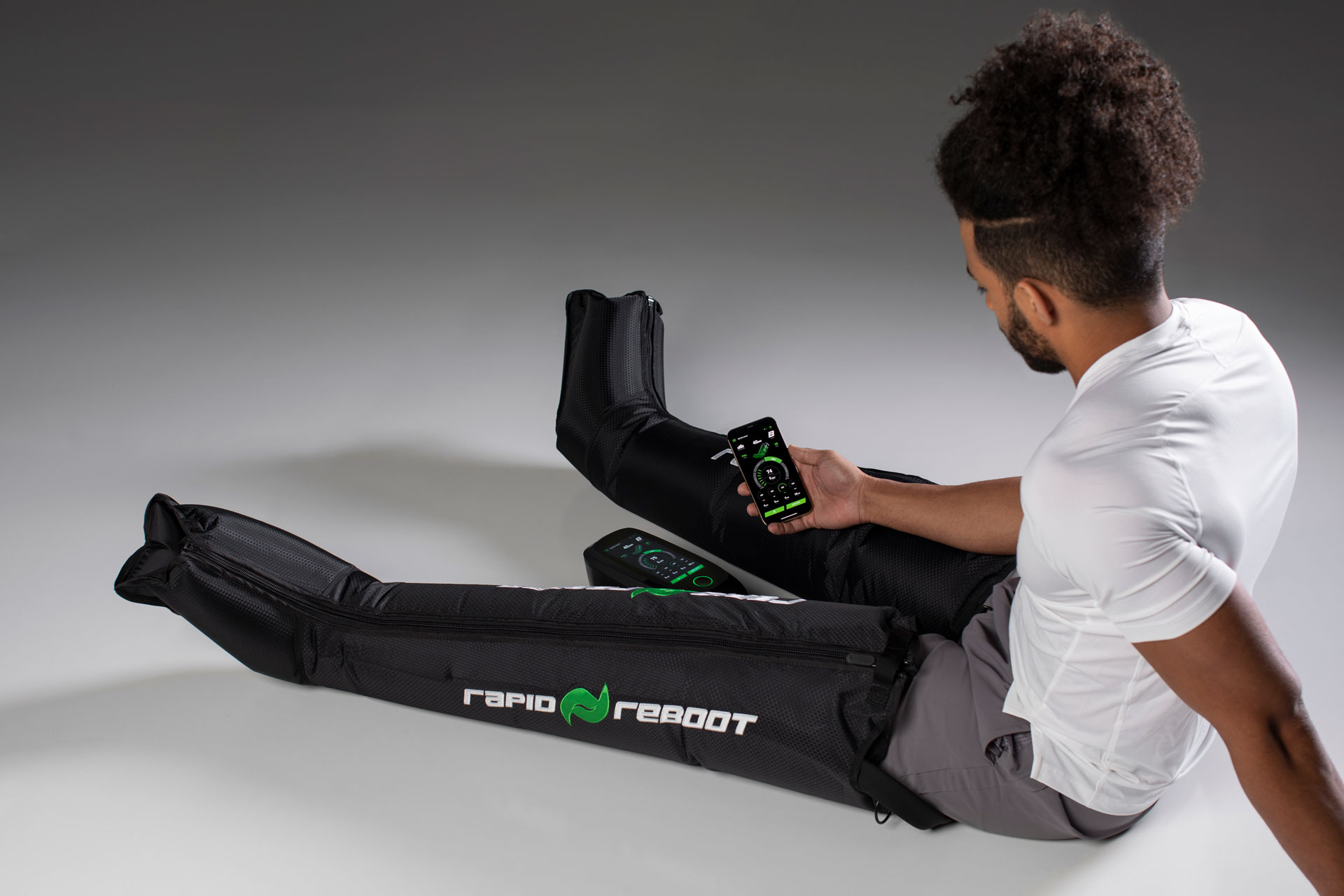
Sequential pneumatic compression works with your circulatory system, not against it. Here is what happens during a session.
1
Sequential compression mimics venous return
Chambers inflate from the foot upward in a sequential wave, pushing venous blood proximally — the same direction your calf-pump mechanism uses during running. This augments, rather than disrupts, your circulatory system's natural flow pattern.
2
Accelerates metabolic waste clearance
After a hard run, lactate, hydrogen ions, and inflammatory byproducts accumulate in muscle tissue. Sequential compression accelerates lymphatic and venous return, reducing the half-life of these metabolites in fatigued muscle.
3
Reduces interstitial swelling
Long runs cause fluid to shift into interstitial spaces, producing the heavy, dense feeling in your quads and calves. Mechanical compression moves this fluid back into circulation, reducing the tissue pressure that contributes to DOMS.
4
Restores tissue to baseline faster
The goal is not to eliminate fatigue — it is to shorten the window between when a hard session ends and when your legs are ready to do quality work again. Twenty to thirty minutes in the boots after a long run can meaningfully compress that window.
Evidence-based dosing for runners
Timing: Start within 60 minutes of finishing a hard run, while tissue is still warm and circulation is elevated.
Duration: 20–30 minutes is the evidence-supported window for most post-run recovery sessions.
Pressure — routine sessions: 100–160 mmHg covers most long runs and tempo workouts.
Pressure — marathon and race-day damage: 150–180 mmHg for the higher inflammatory load of race efforts and peak long runs.
What Runners Are Saying
Built for distance training