SAFETY
Are Compression Boots Safe for Seniors?
Rapid Reboot • Updated 2026 • ~6 min read
For healthy active seniors with no underlying cardiovascular, venous, or neurological conditions, compression boots are safe and in many cases particularly valuable — masters athletes over 50 often see some of the largest relative recovery benefits from IPC of any demographic. Seniors with cardiovascular disease, peripheral artery disease, a history of blood clots, significant peripheral neuropathy, or active skin conditions should obtain physician clearance before use. Age alone is not a contraindication, but the increased probability of one of those underlying conditions in older populations is why a physician consultation before starting use is the safer path for anyone over 60 who has not recently had a clean bill of vascular health.
Why Seniors Often Benefit More, Not Less
Circulatory efficiency naturally decreases with age. Venous return slows, lymphatic drainage can become less efficient, and exercise-induced recovery typically takes longer. These are the exact variables that intermittent pneumatic compression directly addresses. Masters athletes in their 50s, 60s, and 70s who use compression boots regularly often report being able to maintain training volumes that would otherwise not be sustainable, and clinical studies on older adults have shown meaningful benefits to circulation and leg swelling management. The recovery mechanism does not become less effective with age; if anything, it becomes more relevant.
Where the Caution Lives
The reason physician clearance matters more for older users is not the technology — it is the probability of undiagnosed underlying conditions. Peripheral artery disease is significantly more common over 60. Venous insufficiency is more common. Neuropathy, often from diabetes, is more common. None of these make compression boots inherently dangerous, but they all require the device to be used differently — lower pressures, shorter durations, careful monitoring, and sometimes full avoidance. A vascular-focused primary care visit before starting IPC use is a reasonable investment for any senior.
Practical Starting Guidance
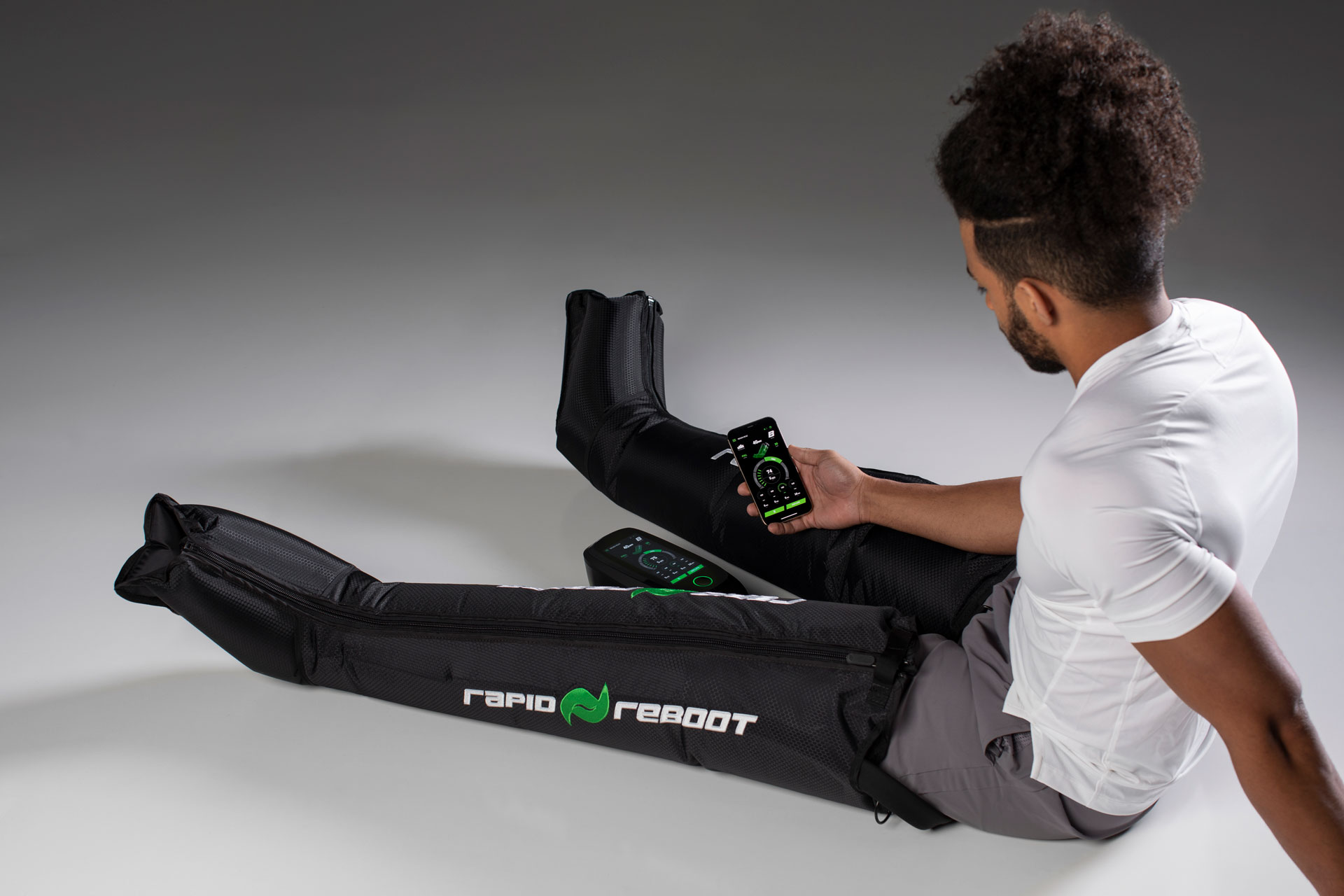
With physician clearance, begin at the low end of the pressure range — 60 to 80 mmHg on the Rapid Reboot REGEN — and 15 to 20 minute sessions. The REGEN's 20 precise pressure levels make it easy to dial in a comfortable starting point and progress gradually over the first one to two weeks if comfortable. Pay particular attention to skin condition on removal — older skin is thinner and more prone to friction-related irritation. A thin compression sleeve or athletic pant underneath the boot adds a layer of protection.
Signals That Warrant Immediate Physician Contact
Any pronounced numbness that persists after a session, new or worsening leg pain, skin that stays pale or cold after sessions, swelling that does not reduce with IPC use, or any signs of a skin ulcer or non-healing wound warrant stopping use and contacting a physician. These signals can be early indicators of vascular or circulatory issues that need medical attention.
Related Questions
Is there an age limit for compression boots?
No age limit exists. Healthy seniors in their 70s, 80s, and beyond can safely use IPC with physician clearance. The clinical IPC literature includes studies on patients well into their 80s.
Can seniors with high blood pressure use compression boots?
Usually yes, with physician clearance. Well-controlled hypertension alone is not typically a contraindication, but it is one of several variables that your clinician will want to factor in before giving the green light.
Are compression boots a good gift for an older parent?
Only after a physician conversation. The benefits are real for healthy seniors, but the need for clearance means that gifting compression boots is best done as a conditional gift that arrives after a medical OK — not as a surprise that might not be appropriate for the recipient.
Read the Full Guide
For the complete safety guide covering contraindications, risks, and who should not use compression boots, read the full pillar guide: Are Compression Boots Safe? Contraindications, Risks, and Who Shouldn't Use Them.
Rapid Reboot • rapidrebootai@gmail.com • rapidreboot.com
© 2026 Rapid Reboot. Educational content; not medical advice. Rapid Reboot systems are FDA 510(k) cleared as Class II powered inflatable tube massagers for the temporary relief of minor muscle aches and pains and for temporary increase in circulation.
QUICK ANSWER
For healthy active seniors with no underlying cardiovascular, venous, or neurological conditions, compression boots are safe and in many cases particularly valuable — masters athletes over 50 often see some of the largest relative recovery benefits from IPC of any demographic. Seniors with cardiovascular disease, peripheral artery disease, a history of blood clots, significant peripheral neuropathy, or active skin conditions should obtain physician clearance before use. Age alone is not a contraindication, but the increased probability of one of those underlying conditions in older populations is why a physician consultation before starting use is the safer path for anyone over 60 who has not recently had a clean bill of vascular health.