BUYING GUIDE
Are Compression Boots Worth It for Runners?
Rapid Reboot • Updated 2026 • ~6 min read
QUICK ANSWER Yes, for most serious runners. Compression boots deliver their highest ROI to athletes whose training load is high enough that recovery is the rate-limiting factor — which describes virtually every marathon trainee, trail runner, and competitive age-grouper. At typical Rapid Reboot REGEN Boots Package pricing of $1,195 to $1,595, the boots pay for themselves within 13 to 17 professional massage sessions, and most runners use them far more than that in the first year alone. |
Why Runners Specifically Benefit
Running generates repeated eccentric muscle loading, which is the single highest driver of delayed-onset muscle soreness. Long runs, tempo sessions, and track workouts all produce the kind of micro-damage and interstitial fluid accumulation that compression boots are specifically designed to address. The combination of high training frequency, high per-session muscle damage, and high cumulative fatigue means runners see the most dramatic week-over-week recovery benefit of almost any athletic population.
The Training Capacity Math
The most honest way to think about whether compression boots are worth it for a runner is training capacity, not product features. Recovery tools only matter if they let you train more or train harder without breaking down. For a marathoner in a 16-week build, adding one quality session per training block — a tempo run you could not have handled without faster recovery, a long run executed sharper because the previous day was cleaner — compounds into meaningful fitness gains by race day. The research on IPC supports exactly this: reduced next-day soreness, faster perceived readiness, and lower creatine kinase markers after hard sessions.
The Cost-Per-Use Math
A professional sports massage runs roughly $90 to $120 per session in most US markets. A set of Rapid Reboot REGEN boots at $1,195 pays for itself in 12 to 14 massages. Most committed runners in a marathon build would use compression boots 3 to 5 times per week — 48 to 80 sessions in a single 16-week build alone — so the cost-per-session quickly drops below $15 and keeps falling over the 5+ year usable lifespan of the boots. Against the alternative of skipping recovery entirely, the training capacity unlocked is the real return.
When Compression Boots Are NOT Worth It For a Runner
Honest framing: if you are running 15 to 20 miles per week at conversational pace and your recovery is already fine, compression boots will feel nice but will not produce a dramatic change. The benefit scales with training load. Runners doing one easy 30-minute run every other day do not have enough recovery demand to see the cumulative training-capacity effect that justifies the purchase. For this population, the boots are a luxury, not a performance tool.
The boots become clearly worth it at the point where weekly volume crosses roughly 25 to 30 miles, where there is at least one hard quality session per week, or where marathon or ultramarathon training is on the calendar.
When To Use Them In a Running Week
After long runs, after tempo or threshold sessions, after track workouts, and on rest days during heavy training blocks. A 20 to 30 minute session at 80 to 100 mmHg within a few hours of finishing the workout produces the strongest acute benefit. Evening sessions on the couch after a morning workout are still effective. For marathon race week specifically, morning sessions at lighter pressure (60 to 80 mmHg) on the day of tune-up workouts and race day itself are a common pro-runner protocol.
What To Look For In Boots For Runners
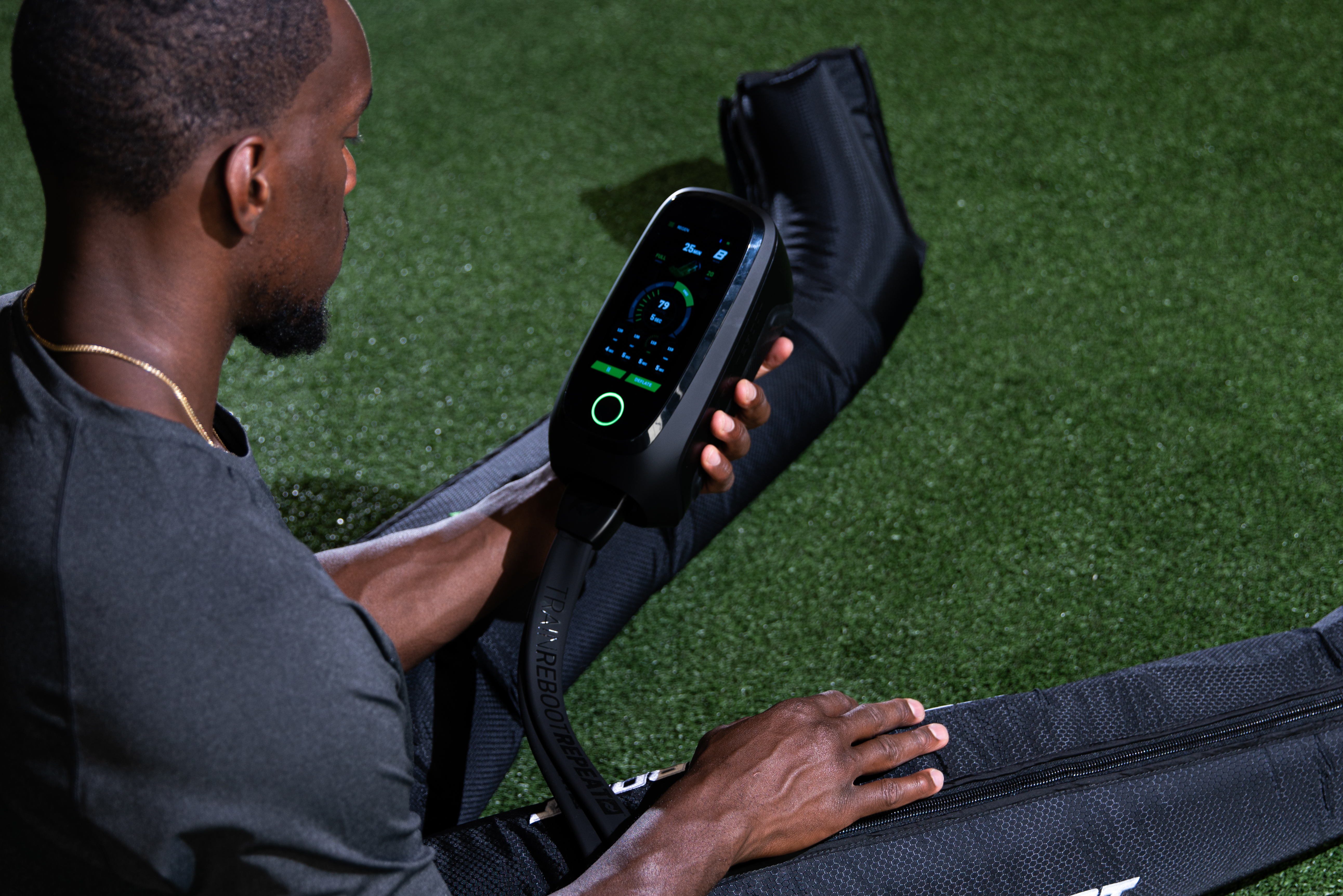
Independent chamber control is the feature runners value most after their first month of use, because running fatigue rarely shows up evenly. One calf is almost always tighter than the other, and one foot or ankle zone often needs more work than the rest of the leg. Rapid Reboot REGEN boots offer fully independent control of all four chambers, which means you can target the specific zone that feels worst on a given day. Fixed-sequence boots apply a single global pressure to every chamber, which works but is less adaptable to real recovery needs.
Related Questions
Should a marathoner buy compression boots?
Yes, for most marathoners. The training load during a marathon build is high enough that recovery becomes the rate-limiting factor, which is exactly where compression boots produce the strongest benefit.
Do compression boots help shin splints?
Compression boots reduce lower-leg swelling and improve circulation, which can ease the inflammatory component of shin splint pain. They are not a substitute for proper load management or medical evaluation for persistent symptoms.
Do elite runners use compression boots?
Yes. Compression boots are standard equipment in professional distance running, elite marathon training groups, and NCAA distance programs.
Read the Full Guide
For the complete cost, value, and ROI breakdown of compression boots across sports and training levels, read the full pillar guide: Are Compression Boots Worth It? The Honest Cost-Benefit Breakdown.
Rapid Reboot • rapidrebootai@gmail.com • rapidreboot.com
© 2026 Rapid Reboot. Educational content; not medical advice. Rapid Reboot systems are FDA 510(k) cleared as Class II powered inflatable tube massagers for the temporary relief of minor muscle aches and pains and for temporary increase in circulation.