TROUBLESHOOTING GUIDE
Compression Boot Troubleshooting: The Complete 2026 Problem-Solving Guide
By Rapid Reboot • Updated April 2026 • ~3,300 words • 14-minute read
TL;DR — The Most Common Problems and Their Real Causes Most compression-boot problems fall into one of five categories: sensation issues (numbness, tingling, discomfort), pressure issues (feels too weak, feels uneven, holds poorly), hardware issues (controller errors, leaks, charging problems), fit issues (too tight, too loose, wrong size), and recovery issues ("the boots don't seem to be working"). Each of these has specific, diagnosable causes and fixes, and most can be resolved by the athlete in under ten minutes without contacting support. This guide walks through every common issue in order, starting with the sensation problems that are easiest to misread as hardware failures and finishing with when it is time to call customer support or a medical professional. Rapid Reboot REGEN owners also benefit from serviceable components — hoses, liners, and bladders can be replaced individually — which is why durability problems that would total a consumer-grade system often only cost a single replacement part on a REGEN. |
Sensation Issues: Numbness, Tingling, Pain, and Discomfort
The most common first-time compression-boot complaints are about how the session feels. Most of these are benign and adjustable, but a few warrant stopping the session and evaluating further. Here is how to read what your body is telling you during a session.
Problem: Mild tingling during the first few sessions
Cause: Normal tissue acclimation to external compression. The sensory nerves are registering a new stimulus, and first-session tingling is almost universal. Fix: Continue the session at a slightly lower pressure and allow 2-to-3 sessions for the sensation to normalize. If tingling persists past the fifth session or increases rather than decreases, treat it as the next problem.
Problem: Persistent or worsening numbness during a session
Cause: Pressure is too high for the current tissue state, the boot is constricting a superficial nerve at a specific point, or a garment sizing issue is creating a localized pressure concentration. Fix: Stop the session immediately. Reduce pressure by 30 to 50 mmHg and restart. If numbness recurs, inspect the boot fit for wrinkles, over-tightened closures, or bunched liners that could focally concentrate pressure. Adjust and retry at the lower pressure. If numbness still recurs, take a day off and consult a clinician — persistent compression-related numbness can indicate an underlying nerve issue unrelated to the boot.
Problem: Sharp or burning pain during a session
Cause: Pressure is well above the athlete's tolerance, there is an active injury or inflammation in the compressed area, or the boot is contacting broken skin. Fix: Stop the session. Compression boots are never supposed to hurt. Inspect the skin for any wound, rash, or inflammation. If the skin is intact, reduce pressure by 40 to 60 mmHg and retry. If pain recurs at the lower pressure, do not continue — either there is an underlying tissue issue or the boot is the wrong size for the athlete. For acute injuries, wait until the acute phase has resolved before using compression, and review the safety guide for contraindications.
Problem: Cold or cyanotic toes during a session
Cause: Pressure is high enough to restrict arterial inflow to the foot, which should not happen at normal recovery pressures but can occur if the boot is sized too small, if the foot chamber is misaligned, or if the athlete has an undiagnosed arterial issue. Fix: Stop the session. Remove the boot and allow circulation to return — toes should pink up within 1 to 2 minutes. If they do not, seek medical evaluation. On restart, reduce pressure by 40 mmHg and check foot color midway through the session. If the problem recurs, the boot may be the wrong size, or compression therapy may not be appropriate for this athlete without clinical supervision.
Problem: Lightheadedness during or after a session
Cause: The systemic fluid shift from limb to core vasculature can occasionally provoke a vasovagal response, especially in dehydrated athletes, fasted athletes, or athletes who stood up quickly after a session. Fix: Sit or lie down. Hydrate. Avoid standing up quickly immediately after a session — take 30 seconds to transition. If lightheadedness recurs at multiple sessions, reduce pressure and session duration, ensure adequate hydration and caloric intake before sessions, and consult a physician if symptoms persist.
Pressure Issues: Too Weak, Uneven, or Not Holding
The second category of common problems is about whether the boot is actually delivering the pressure it is supposed to deliver. These issues are often misread as a defective device when the root cause is usage or fit.
Problem: Session feels too weak even at high pressure settings
Cause: The boot is too loose, a chamber hose is disconnected, the liner is bunched inside the boot, or the athlete has acclimated to the pressure and needs a higher setting. Fix: Check that all hoses are firmly seated at both the controller and the boot quick-connects. Tighten the boot closures (zipper, velcro, or sliding buckles) so the garment is snug against the leg before the session starts — a loose boot will pressurize air space rather than tissue, and the limb will receive less force than the spec sheet promises. Smooth the inner liner. If the boot still feels weak, gradually increase pressure by 20 mmHg per session until the session feels firm and productive.
Problem: One leg or one chamber feels dramatically different from the others
Cause: A partial hose blockage, a bunched liner in one chamber, a micro-leak in one bladder, or a quick-connect that is not fully seated. Fix: Stop the session. Unplug and re-seat every quick-connect hose on the suspect side. Inspect the boot bladder for visible damage or wear. If the problem persists after re-seating hoses and inspecting the garment, swap the left and right boots (if the system supports it) to isolate whether the issue is in the garment or in the controller. If the problem follows the boot, the bladder or internal hose is the likely cause — contact Rapid Reboot support for a replacement garment (a serviceable repair on REGEN, a full-unit replacement on most consumer systems).
Problem: Boot does not hold pressure through the session
Cause: An internal leak somewhere in the garment, a failing check valve in the controller, or (most commonly) a loose quick-connect that is releasing pressure slowly. Fix: Check every quick-connect first. Re-seat. Run a short session and watch the controller pressure readout — if pressure drops steadily during the compression phase, there is a leak. Leaks in a REGEN system are almost always in the garment or hoses rather than the controller, and replacement hoses and bladders are available as individual parts. For consumer systems, a leak usually means a full-unit replacement.
Problem: Controller displays a pressure error or fault code
Cause: Varies by device and error code. Most commonly: a hose is disconnected, the boot garment has been removed mid-session, the device cannot reach target pressure (usually a leak), or the device has overheated during extended use. Fix: Consult the controller error code reference in the user manual. Re-seat all connections. Allow the controller to cool if it has been running continuously for more than an hour. Power-cycle the controller. If the error recurs after a full reset, contact support with the specific error code and approximate session history.
Hardware Issues: Controller, Battery, and Charging
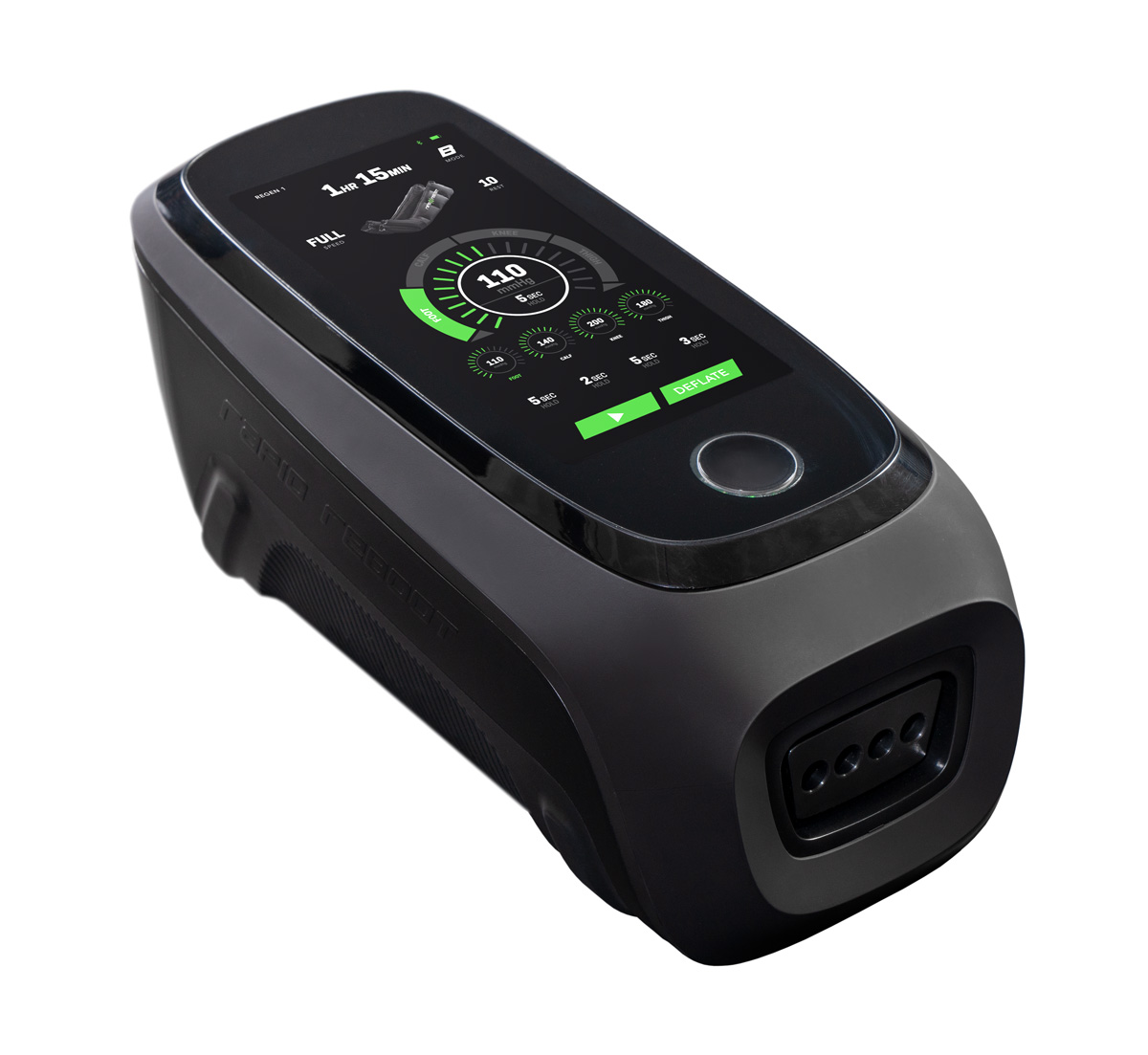
The controller is the component that usually fails first in heavy-use environments, which is why Rapid Reboot covers it under a 2-year warranty and builds it in a serviceable housing. Here are the most common hardware issues and their fixes.
Problem: Controller will not turn on
Cause: Depleted battery (for wireless models), unplugged or defective power supply (for wired models), or a controller firmware hang. Fix: Confirm the power supply is fully seated and the wall outlet is live. For battery-powered models, charge for at least 30 minutes before attempting to power on. Hold the power button for 10 seconds to force a restart. If the controller still does not respond, contact support.
Problem: Battery runtime has dropped noticeably
Cause: Normal lithium-ion battery degradation (roughly 20% capacity loss over 500 full charge cycles), a charging habit that shortens battery life (repeatedly charging to 100% and letting it drain to 0%), or a firmware issue. Fix: For routine degradation, expect gradual runtime loss over years of use; this is normal. To maximize battery life, charge to 80% for daily use and only charge to 100% before travel or long sessions. For dramatic runtime loss after a short period of ownership, contact support — the battery may be eligible for warranty replacement.
Problem: Hose or quick-connect has developed a crack or split
Cause: Normal wear from repeated cycling, storage in a bent or pinched position, or exposure to temperature extremes. Fix: Replacement hoses and quick-connects are available as individual parts from Rapid Reboot — the serviceable design means a cracked hose is a $20 problem, not a full-system problem. Order the replacement, swap it in, and continue using the system. This is a key advantage of the REGEN design over consumer systems where a cracked hose often means a full replacement.
Problem: Zipper or closure on the boot garment has failed
Cause: Normal wear from repeated opening and closing, particularly in multi-user training-room environments. Fix: Contact Rapid Reboot for replacement boot garments. Boots can be replaced individually while keeping the controller, hoses, and other components. In training-room settings, routine zipper inspections during the weekly maintenance check can identify wear before total failure.
Fit Issues: Sizing, Coverage, and Comfort
A correctly sized boot makes every other variable work. An incorrectly sized boot undermines pressure delivery, causes discomfort, and can produce pressure hot spots or inadequate coverage. Here are the most common fit issues.
Problem: Boot is too tight in the calf or thigh
Cause: Larger-framed athletes or athletes with well-developed lower-body musculature often need a size larger than their height alone would suggest. Size by circumference, not by height. Fix: Consult the Rapid Reboot sizing chart using measured calf and thigh circumference. If between sizes, choose the larger size for comfort and proper chamber distribution. Contact support for a sizing exchange if the current boot is clearly wrong.
Problem: Boot is too loose and bunches during the session
Cause: Boot is sized larger than needed, or the athlete has lost muscle mass or limb volume since the initial sizing. Fix: A boot that bunches during pressurization will deliver inconsistent pressure and create hot spots. Smooth the boot carefully before starting each session. If the issue persists, consider sizing down. Some athletes benefit from wearing thin compression socks inside the boot to reduce slack.
Problem: The boot does not cover the full thigh or reach the hip
Cause: Standard-length boots are designed for average anatomy; taller athletes or athletes with long femurs may need the extended-length configuration. Fix: Rapid Reboot offers extended-length boots for tall athletes. Additionally, the hip attachment (available as part of the REGEN Boots + Hips package at $1,395 or the REGEN Complete Package at $1,595) extends coverage from the thigh into the hip and glute region, which is the most common solution for athletes whose standard boots leave the upper thigh uncovered.
"The Boots Don't Seem to Be Working" — Recovery Effect Troubleshooting
The final category is the most subjective and also the most frequently misunderstood. When an athlete says "the boots don't seem to be working," the usual meaning is one of four things: the recovery feeling is less pronounced than expected, soreness is not decreasing across a training block, sleep is not improving, or the athlete is not noticing a dramatic performance improvement. Each of these has a different diagnostic pathway.
Possibility 1: Pressure and duration are below the therapeutic window
Many first-time users use pressures that are far below what the literature supports and sessions that are shorter than the 15-to-30 minute window where IPC benefit accumulates. Fix: Increase pressure to at least 100 mmHg (more for larger athletes) and run full 20-minute sessions. The sub-therapeutic session is the most common reason for "not feeling anything."
Possibility 2: The athlete is expecting performance gains, not recovery gains
Compression boots are a recovery tool. They do not make you faster or stronger within a single session. What they do is protect training quality across a block — better sleep, less day-to-day soreness, more consistent readiness. Those benefits are real but they show up over weeks, not within a single session. Fix: Recalibrate expectations. Track subjective readiness, sleep quality, and daily soreness across a 4-to-6 week block before deciding whether the boots are helping.
Possibility 3: The athlete has other unresolved recovery debt
Compression boots cannot fix a 5-hour-per-night sleep habit, a 70-gram-per-day protein intake, or chronic dehydration. If the foundational recovery inputs are broken, no recovery tool will deliver the expected effect. Fix: Audit sleep, protein intake, hydration, and programming load before blaming the hardware. For most athletes not feeling the expected benefit from compression boots, the problem is upstream.
Possibility 4: The session timing is wrong for the goal
IPC is most effective when used within the first 60 minutes after a hard session (for acute recovery) or on dedicated recovery days (for between-session flushing). Using the boots only once a week or only at bedtime far from training does not produce the training-block benefit that the literature supports. Fix: Use compression boots within an hour of hard training for at least 4 weeks before evaluating whether they are helping.
Warning Signs That Require Stopping and Seeking Medical Evaluation
Most compression-boot issues are benign and fixable. A small number are not. The following signs should prompt an immediate stop and a medical consultation before the next session.
- Pain that persists after the boot is removed.
- Swelling that worsens rather than improves after sessions.
- Numbness or weakness that persists for more than a few minutes after a session.
- Skin discoloration, bruising, or rashes that appear during or after sessions.
- Chest pain, shortness of breath, or severe lightheadedness during or after a session.
- Calf swelling, warmth, redness, or tenderness (which can indicate DVT — see the safety guide).
- Any sudden or unexplained symptom that does not resolve quickly after ending the session.
Full detail on contraindications, populations that need physician clearance, and absolute safety rules is available in our dedicated safety guide pillar.
When to Contact Rapid Reboot Support
Before contacting support, most of the problems in this guide can be resolved with three basic steps: re-seat all hoses and connections, inspect the garment for visible damage, and try a power-cycle of the controller. If the problem persists after those three steps, contact Rapid Reboot support with the following information: the specific problem, any error codes displayed, approximate session count or ownership duration, and any troubleshooting steps already tried. Because REGEN components are serviceable individually, most support interactions result in a replacement part (hose, liner, bladder) rather than a full-system RMA, which turns around quickly and keeps the athlete training.
Frequently Asked Questions
Why do my compression boots feel weaker than they used to?
Most often: an acclimation effect (the same pressure feels less intense after weeks of use), a loose boot that is not pressing against the tissue, or a slow leak in a bladder or hose. Check boot tightness first, then inspect hoses and seams. If you have been using the boots for months, try increasing pressure by 20 mmHg to compensate for acclimation.
Is it normal for my legs to feel heavy immediately after a session?
A brief "legs feel different" sensation is normal for 5 to 10 minutes after a session as circulation normalizes. Persistent heaviness, swelling, or discomfort that lasts more than 30 minutes is not typical and warrants reducing pressure for the next session.
Can I use compression boots every day?
Yes, for healthy athletes with no contraindications (see safety guide). Daily use is safe and is the protocol most serious athletes actually use. There is no known downside to daily sessions as long as the pressure and duration are in the normal range and the athlete tolerates them well.
My boots have a smell — what do I do?
Normal with extended use. Remove the liner, wash at 140°F on a high-heat dry cycle. Wipe the interior of the boot bladder with hospital-grade disinfectant. Allow the boot to fully air-dry in an open position. Replacement liners are available from Rapid Reboot if the smell persists.
Do I need to replace my compression boots every few years?
With consumer-grade boots, often yes — most systems have components that wear out and cannot be repaired, which means a full replacement at the 2-to-3 year mark for heavy users. Rapid Reboot REGEN is designed for serviceability: hoses, liners, bladders, and even boot garments can be replaced individually. A well-maintained REGEN system can remain in service for many years of heavy use because the wear parts are designed to be swapped.
Is my problem covered under warranty?
Rapid Reboot REGEN controllers are covered under a 2-year warranty, and boot garments are covered under a 1-year warranty under normal use. Extended warranty options are available for clinical and team environments. Wear items like liners and hoses are not warrantied but are inexpensive to replace. For a specific warranty question, contact Rapid Reboot support with the model and approximate purchase date.
People Also Ask
Can I use compression boots with a pacemaker?
Consult your cardiologist before using any IPC device if you have a pacemaker or other implanted electronic device. While compression boots operate on a pneumatic (air pressure) mechanism rather than electrical stimulation, the pressure changes may affect circulation in ways that warrant physician clearance. See our full safety guide (Pillar 7) for a complete list of contraindications.
How long do compression boots last?
Consumer-grade systems typically last 1 to 3 years under regular use before components like bladders, hoses, or zippers fail. Professional-grade systems like the Rapid Reboot REGEN are designed for longer service life because wear parts (hoses, liners, bladders, garments) can be individually replaced rather than requiring full-system replacement.
Can I use compression boots every day?
Yes, daily use is safe for healthy athletes with no contraindications. Most serious athletes and professional training rooms use compression boots daily. There is no known downside to daily sessions at appropriate pressure and duration settings.
Do compression boots help with swelling after surgery?
Post-surgical compression is a clinical application that requires physician supervision and typically uses medical-grade IPC devices cleared for that specific indication. Consumer compression boot systems like the Rapid Reboot REGEN are FDA 510(k) cleared for the temporary relief of minor muscle aches and pains and for temporary increase in circulation in healthy individuals. Do not use consumer compression boots for post-surgical recovery without explicit physician approval.
Bottom Line: Most Problems Are Fixable in Ten Minutes
The vast majority of compression-boot issues — sensation, pressure, hardware, fit — are diagnosable and fixable at the athlete level in under ten minutes using the pathways in this guide. The key is to work through the categories systematically: sensation first, then pressure, then hardware, then fit, then recovery-effect expectations. A small number of issues require support contact or medical consultation, and those are called out clearly above.
Most compression boot issues trace back to a handful of common causes — connection leaks, firmware glitches, and pressure calibration drift. Work through the systematic checks in this guide before contacting support, and keep a maintenance log so you can spot recurring patterns early. A well-maintained system lasts significantly longer and delivers more consistent treatment sessions.