SAFETY
Are Compression Boots Safe During Pregnancy?
Rapid Reboot • Updated 2026 • ~6 min read
Pregnancy is a category that specifically requires OB-GYN consultation before using compression boots. Many pregnancies can tolerate intermittent pneumatic compression safely, and IPC is sometimes actively recommended by clinicians to manage pregnancy-related leg swelling or to reduce the elevated clotting risk that accompanies pregnancy. But pregnancy is not a one-size-fits-all physiological state — risk factors, trimester, medical history, and pregnancy-specific conditions all influence whether compression boots are appropriate. The short rule: never use compression boots during pregnancy without your OB-GYN's approval and specific guidance.
Why Pregnancy Is a Medical-Supervision Category
Pregnancy increases circulating blood volume, shifts hormonal status in ways that increase clotting tendency, and mechanically changes venous return as the uterus expands. These are the exact variables that IPC directly interacts with. For pregnancies without complications, mild IPC can be compatible with normal physiology. For pregnancies with gestational hypertension, preeclampsia, a history of blood clots, or other complications, compression therapy requires individualized medical decision-making. Clinical-grade medical compression stockings are commonly prescribed during pregnancy; consumer compression boots are a separate category that requires the same physician-first decision tree.
What Expecting Patients Typically Ask About
The most common pregnancy-related question is leg swelling, especially in the third trimester. Clinicians sometimes recommend gentle IPC to help manage this, in coordination with elevation, medical compression stockings, and other interventions. Another common question is prolonged sitting or travel during pregnancy, where IPC may be useful for reducing clot risk on long flights under physician guidance. In either case, the device is being used within a broader care plan, not as a self-prescribed solution.
Practical Guidance for Pregnant Users With Physician Approval
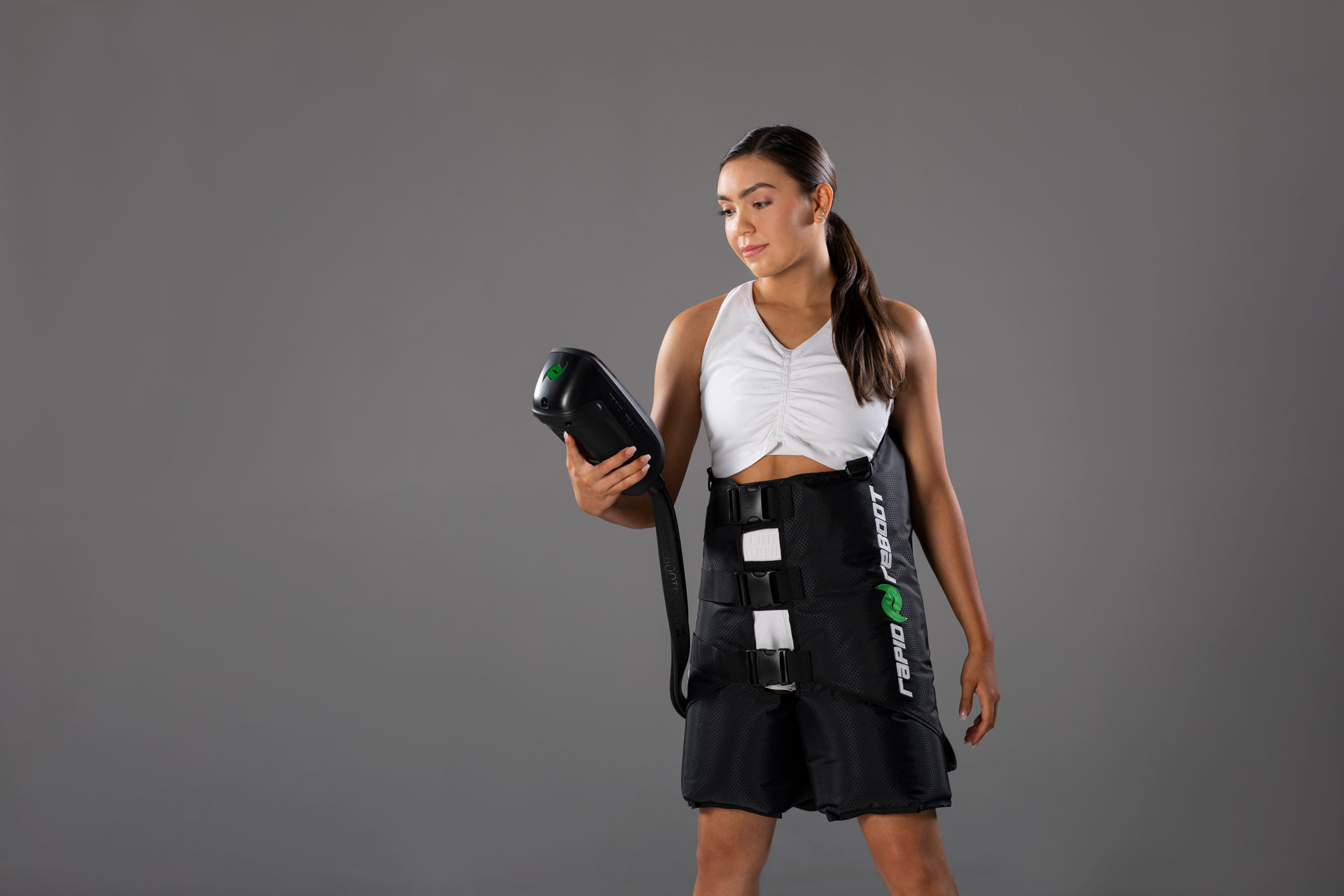
If your OB-GYN clears compression boot use, start at the lowest effective pressure — typically 60 to 80 mmHg — and short session durations of 10 to 15 minutes. The Rapid Reboot REGEN's 20 precise pressure levels let you follow any specific pressure guidance your physician provides. Avoid lying flat for extended sessions after 20 weeks; a semi-reclined position is safer for maternal circulation. Stop any session if you notice contractions, unusual swelling, shortness of breath, or any other change your physician has asked you to watch for. Always communicate with your OB-GYN about session frequency and any changes in how your body is responding.
Postpartum Use
The postpartum period is another category where physician consultation is important. Cesarean delivery, perineal healing, and postpartum clotting risk all change the picture. Many postpartum users are cleared for IPC within weeks of delivery as part of a recovery plan, especially for swelling management and circulation support — but that decision belongs to your clinician.
Related Questions
Can compression boots help with pregnancy swelling?
Possibly, under physician guidance. Pregnancy-related leg swelling is a common symptom in the second and third trimesters, and IPC can complement other interventions like elevation and medical compression stockings. It is not a substitute for medical evaluation — always clear use with your OB-GYN first.
What pressure should I use during pregnancy?
Only your OB-GYN can recommend a specific pressure. Pressures in the range of 60 to 80 mmHg on the Rapid Reboot REGEN are conservative starting points that a clinician is most likely to approve for healthy pregnancies without complications.
Are compression boots safe in the third trimester?
For some pregnancies, yes, with physician clearance. For others — particularly those with gestational hypertension, preeclampsia, or a history of clotting — third-trimester IPC may not be appropriate. This is a conversation to have with your OB-GYN at each prenatal visit.
Read the Full Guide
For the complete safety guide covering contraindications, risks, and who should not use compression boots, read the full pillar guide: Are Compression Boots Safe? Contraindications, Risks, and Who Shouldn't Use Them.
Rapid Reboot • rapidrebootai@gmail.com • rapidreboot.com
© 2026 Rapid Reboot. Educational content; not medical advice. Rapid Reboot systems are FDA 510(k) cleared as Class II powered inflatable tube massagers for the temporary relief of minor muscle aches and pains and for temporary increase in circulation.
QUICK ANSWER
Pregnancy is a category that specifically requires OB-GYN consultation before using compression boots. Many pregnancies can tolerate intermittent pneumatic compression safely, and IPC is sometimes actively recommended by clinicians to manage pregnancy-related leg swelling or to reduce the elevated clotting risk that accompanies pregnancy. But pregnancy is not a one-size-fits-all physiological state — risk factors, trimester, medical history, and pregnancy-specific conditions all influence whether compression boots are appropriate. The short rule: never use compression boots during pregnancy without your OB-GYN's approval and specific guidance.