RECOVERY PROTOCOLS
What Is a Contrast Therapy Protocol With Compression Boots?
Rapid Reboot • Updated 2026 • ~6 min read
QUICK ANSWER Contrast therapy alternates heat and cold exposure to drive circulation, reduce soreness, and accelerate recovery. Combined with compression boots, a standard protocol applies heat for 8 to 10 minutes, then cold for 10 to 12 minutes, often repeated once, all while sequential pneumatic compression runs underneath. Rapid Reboot Revamp hot and cold gel sleeves are specifically designed to fit inside the REGEN compression boots, making true combined contrast-plus-compression protocols convenient in a training room or home setting. |
What Contrast Therapy Does
Contrast therapy produces a vascular pumping effect by alternating vasodilation (from heat) and vasoconstriction (from cold). The repeated expansion and contraction of peripheral blood vessels mechanically drives circulation through the target area, which accelerates the movement of venous blood and lymphatic fluid — the same recovery mechanism compression boots address through a different pathway. Adding compression on top of contrast therapy produces an additive effect because the mechanical pressure and the thermal vascular pumping work together rather than competing.
The Standard Combined Protocol
A reliable contrast-plus-compression protocol looks like this. Start with heat for 8 to 10 minutes using the Revamp hot gel sleeves inside the REGEN boots, with compression running at 80 to 100 mmHg in the background. Switch to cold for 10 to 12 minutes using Revamp cold gel sleeves, keeping compression running at the same pressure. This sequence can be repeated once for a total of about 40 minutes if you have time, or used as a single pass for a shorter 20-minute session.
The heat phase opens the vessels, raises tissue temperature, and creates a relaxed, flushed feeling in the legs. The cold phase constricts the vessels, reduces any residual inflammation, and produces the characteristic alertness and soreness reduction that makes cold therapy effective. Running compression throughout both phases keeps venous blood and lymphatic fluid moving during the thermal transitions, which is what makes the combined protocol stronger than contrast therapy or compression alone.
When To Use Contrast Protocols
Contrast therapy is strongest after hard training when both soreness reduction and aggressive circulation drive are useful at the same time. Game-day recovery for basketball, soccer, and hockey players is a common use case because the cold component addresses the sharp post-competition soreness while the heat and compression components clear accumulated fatigue. Between training blocks during heavy build-ups is another high-value window. Contrast is not ideal immediately before training because the cold component can briefly reduce explosive power output.
Strength Training Caveat
Just as with pure cold immersion, contrast therapy that includes meaningful cold exposure in the first 4 to 6 hours after heavy strength training may attenuate muscle hypertrophy adaptations, based on the Roberts et al. (2015, The Journal of Physiology) finding on post-lifting cold water immersion, later confirmed by Malta et al.'s 2021 meta-analysis in Sports Medicine. For hypertrophy-focused athletes, the cleaner post-lifting protocol is heat plus compression (no cold) in the immediate post-workout window, with any cold exposure pushed to later in the day or the following morning.
Why Revamp Makes This Practical
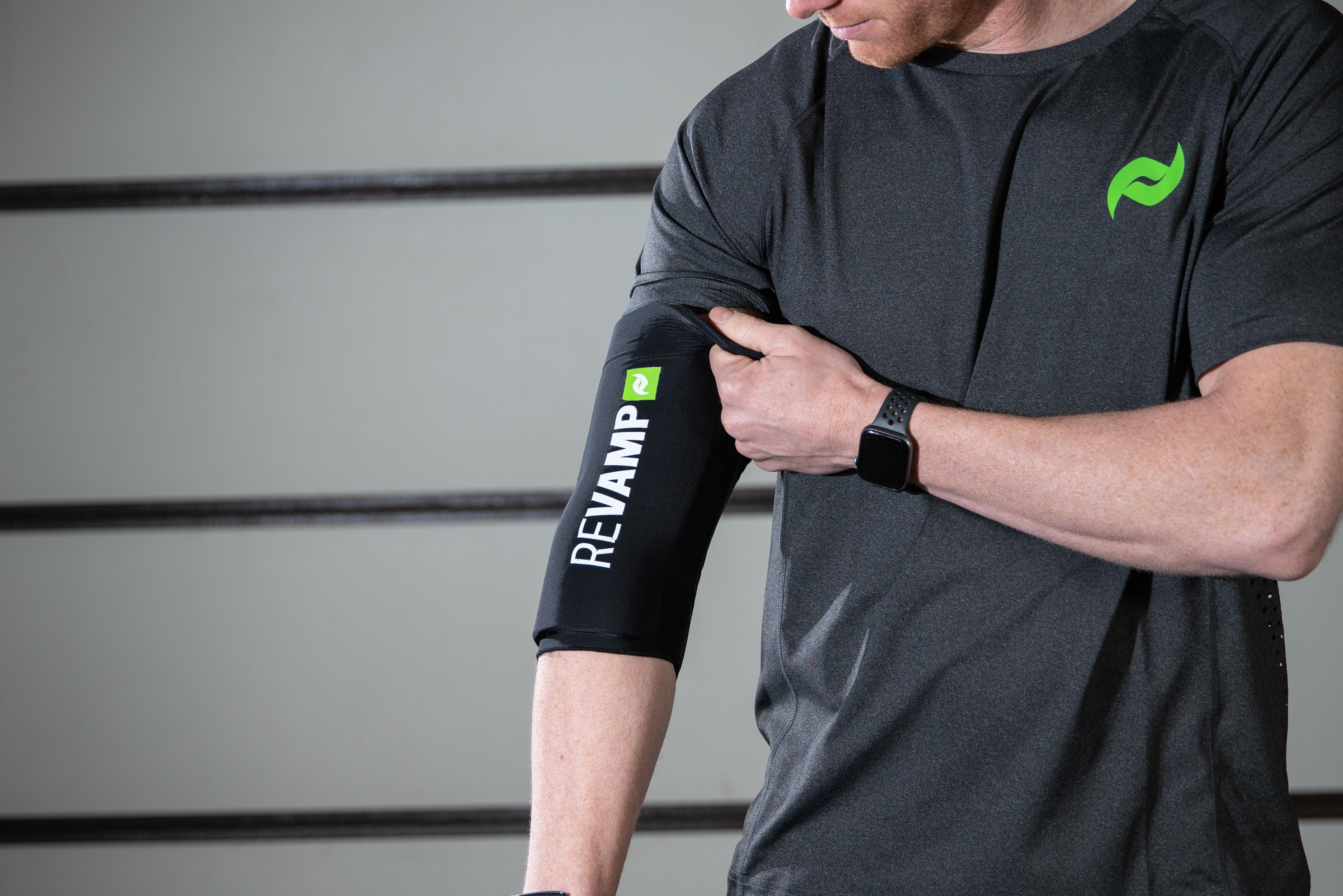
Traditional contrast therapy requires a hot tub and a cold tub, or a hot pack and an ice bath, which is impractical for most home users and even many training rooms. Rapid Reboot Revamp hot and cold gel sleeves fit inside the REGEN compression boots as tube-shaped inserts, which means the heat source and the cold source are applied directly to the target tissue at the same time as the compression, without needing multiple pieces of equipment. Revamp is also available in ankle wraps, shoulder wraps, flat pads, and a cold cap for targeted use outside the boots.
Related Questions
How long should contrast therapy last?
A standard single-pass contrast protocol is about 20 minutes (8 to 10 minutes hot, 10 to 12 minutes cold). A double-pass protocol is about 40 minutes. Longer is not better.
Does contrast therapy actually work?
Yes, for perceived soreness, circulation drive, and subjective recovery. The evidence is strongest for acute post-exercise use and for athletes with meaningful post-training soreness.
Can I do contrast therapy every day?
Yes for healthy adults. During heavy training blocks or competition weeks, daily use is common and safe. Strength-focused athletes should avoid meaningful cold exposure in the 4 to 6 hours after lifting to protect hypertrophy adaptations.
Read the Full Guide
For the complete recovery protocol guide including pressure settings, session timing, and combined modality stacks, read the full pillar guide: How to Use Compression Boots: The Complete Protocol Guide.
Rapid Reboot • rapidrebootai@gmail.com • rapidreboot.com
© 2026 Rapid Reboot. Educational content; not medical advice. Rapid Reboot systems are FDA 510(k) cleared as Class II powered inflatable tube massagers for the temporary relief of minor muscle aches and pains and for temporary increase in circulation.