RECOVERY SCIENCE
How Long Does It Take for Compression Boots to Work?
Rapid Reboot • Updated 2026 • ~6 min read
QUICK ANSWER Most users feel reduced leg heaviness and fatigue during their very first 20-30 minute compression boot session. Measurable recovery benefits — reduced next-day soreness, faster return to training intensity — typically show up after 2 to 3 sessions across a single training week. Cumulative benefits like improved training tolerance and reduced cumulative fatigue usually become obvious within 2 to 4 weeks of consistent use 3 to 5 times per week. |
What Happens During Your First Session
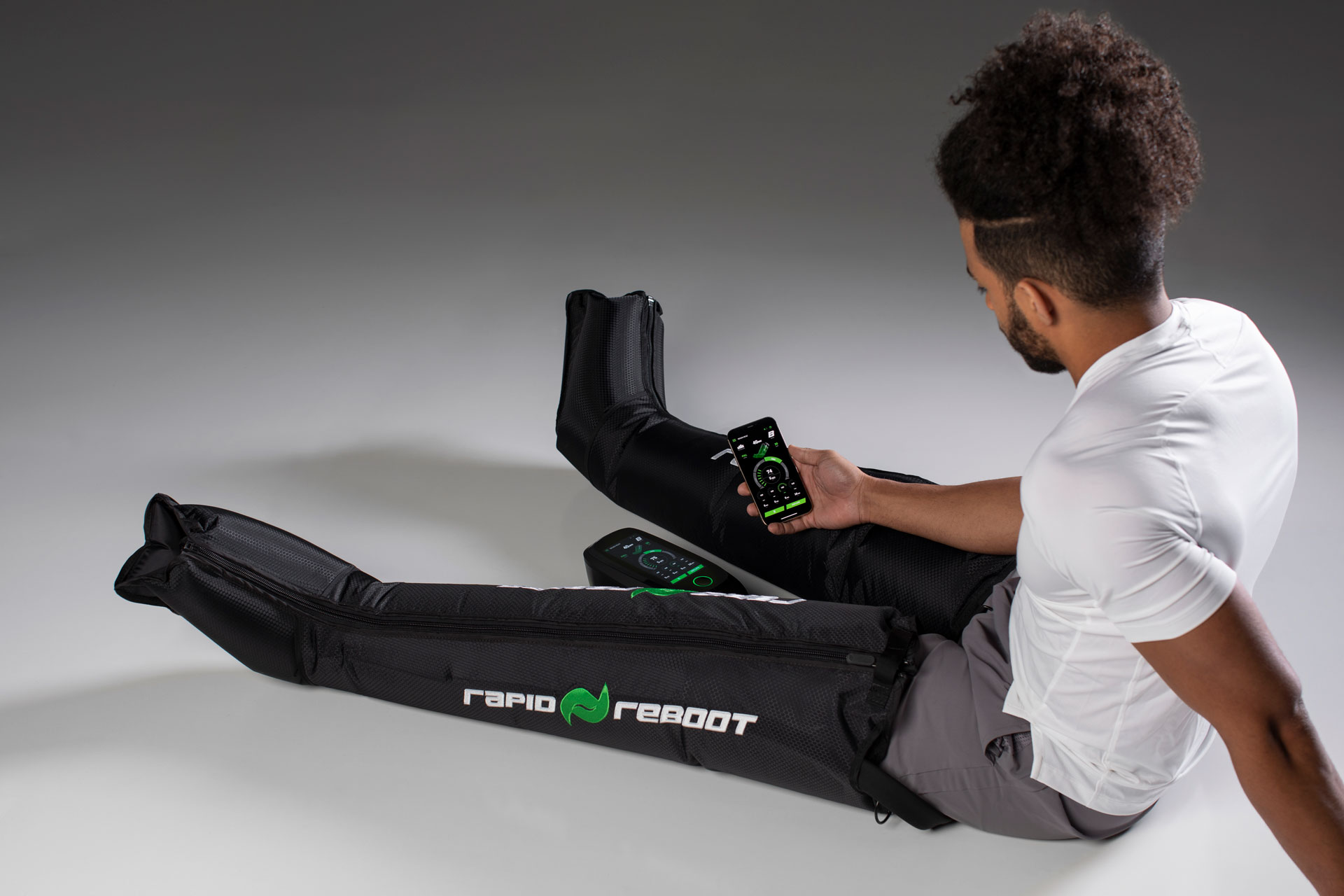
Compression boots start working within the first five minutes. The moment the chambers begin their sequential inflation pattern, they mechanically push venous blood and lymphatic fluid out of the legs and back toward the core, which is the exact physiological process your body uses to clear post-exercise swelling and metabolic byproducts. Most users report a distinct "lighter legs" feeling 10 to 15 minutes into a first session, and that sensation is real — it reflects a measurable drop in interstitial fluid volume in the lower limbs.
A single 20 to 30 minute session at 60 to 100 mmHg is typically enough to produce that in-session relief. The research on intermittent pneumatic compression (IPC) is clear that one session produces acute improvements in perceived recovery and reduced delayed-onset muscle soreness (DOMS) compared with passive rest.
When You Will See Measurable Recovery Benefits
The next-day benefit — waking up with less soreness and more readiness to train — usually shows up after 2 or 3 sessions within the same training week. This is the window where users stop asking "is this working?" and start noticing that their hard training days are being followed by lighter, sharper easy days. Hoffman et al. (2016, JOSPT) found that peristaltic pulse dynamic compression produced immediate subjective fatigue improvements comparable to massage. Heapy and colleagues (2018, Research in Sports Medicine) found that a single 20-minute IPC session after an ultramarathon produced recovery improvements comparable to a full manual massage, and multiple studies since have confirmed that the cumulative effect of repeated sessions is stronger than single-use effects.
When Cumulative Benefits Become Obvious
The bigger payoff — the one that justifies the purchase — usually shows up within 2 to 4 weeks of consistent use. Users who run compression boots 3 to 5 times per week during this window typically report that they are tolerating higher training loads, recovering faster between hard sessions, and feeling fresher on race day. This is the effect that gets marathoners, CrossFit athletes, and court-sport players hooked: not the single-session relief, but the weekly training capacity it unlocks.
Factors That Change the Timeline
Training load matters. Athletes coming off a taper or light week will notice less dramatic in-session relief because they have less fatigue to clear. Athletes in the middle of a heavy training block will feel the benefit more acutely because there is more interstitial fluid, more micro-swelling, and more lingering soreness to address.
Pressure setting matters too. Most recovery research uses 60 to 100 mmHg, which is the sweet spot for circulation without discomfort. Using too little pressure (under 40 mmHg) can produce a pleasant feeling without enough mechanical pumping to move fluid efficiently. Using too much (above 120 mmHg for extended periods) does not add benefit and can feel uncomfortable enough that users cut sessions short.
Session frequency matters most of all. Using compression boots once per week produces occasional relief. Using them 3 to 5 times per week produces the cumulative training-capacity effect that the research supports.
What To Do In Your First Two Weeks
Run a 20 to 30 minute session at 80 to 100 mmHg on every hard-training day and every day with accumulated soreness. Put them on within an hour of finishing a workout when possible, or in the evening on the couch. Track how you feel the following morning. If you are using Rapid Reboot REGEN boots, use the independent chamber controls to target any single zone that feels worse than the others — this is the feature that most users discover in week two and rely on from then on.
Related Questions
Do you feel compression boots working right away?
Yes. Most users feel a distinct lightness and relief in the legs within the first 10 to 15 minutes of their very first session, as the sequential chamber inflation moves venous blood and interstitial fluid out of the legs.
How many times a week should I use compression boots?
Three to five sessions per week is the research-backed sweet spot for active recoverers. Daily use is safe for healthy adults and is often the right choice during heavy training blocks or competition weeks.
Will I notice a difference after one session?
During the session, yes — you will feel lighter legs and reduced heaviness. The next-morning benefit (less soreness, more readiness) usually takes 2 to 3 sessions within the same training week to become obvious.
Read the Full Guide
This article is part of the Rapid Reboot recovery library. For the complete research-backed breakdown of what compression boots do, what they do not do, and the science behind every claim, read the full pillar guide: Do Compression Boots Actually Work? Science, Studies, and Honest Answers.
Rapid Reboot • rapidrebootai@gmail.com • rapidreboot.com
© 2026 Rapid Reboot. Educational content; not medical advice. Rapid Reboot systems are FDA 510(k) cleared as Class II powered inflatable tube massagers for the temporary relief of minor muscle aches and pains and for temporary increase in circulation.