Ironman Training Tips
The definitive recovery-focused training guide for conquering 140.6 miles. Maximize every session, recover smarter, and arrive at the start line race-ready.
Master Each Discipline
An Ironman demands excellence across three sports. Here's your high-level playbook for each leg of the race.
Swim
2.4 Miles · Open Water- Build a strong aerobic base with 3–4 pool sessions per week
- Practice bilateral breathing and open-water sighting
- Include threshold sets (e.g., 10x100m at race pace)
- Rehearse mass starts and drafting techniques
- Swim in your race wetsuit at least 6 times before race day
Bike
112 Miles · Endurance Ride- Build weekly volume to 150–200 miles at peak training
- Nail your bike fit — comfort over 5+ hours is critical
- Train power zones: most of race day is Zone 2–3
- Practice nutrition on every long ride (aim for 60–90g carbs/hr)
- Include weekly brick sessions (bike–to–run transitions)
Run
26.2 Miles · Marathon- Build run volume gradually — never increase more than 10%/week
- Focus on running off the bike with tired legs (brick runs)
- Include one long run (16–20 mi) every 2–3 weeks at peak
- Practice race-day pace — start conservative, finish strong
- Prioritize cadence (170–180 spm) over stride length
Swim Training Deep Dive
-
01
Front-Load Your Swim Block
Dedicate weeks 20–12 to heavy swim volume. Your swim fitness plateaus early, so build the base first and maintain through the bike/run build phase.
-
02
Drill for Efficiency, Not Speed
Spend 30% of pool time on drills: catch-up, fingertip drag, fist swimming. A 10% improvement in stroke efficiency saves more energy than raw power gains.
-
03
Simulate Race Conditions
Practice open-water swimming in groups. Rehearse sighting every 6–8 strokes, navigating buoys, and handling chop. Your pool PR means nothing if you can't swim straight.
-
04
Master Your T1 Exit
Practice wetsuit removal while your heart rate is elevated. Use Body Glide on ankles and wrists. Shave 30–60 seconds off your transition with rehearsal.
Bike Training Deep Dive
-
01
Ride Long, Ride Smart
Your longest training ride should be 5–6 hours at Ironman effort. Resist going harder — race day is about managing output across 112 miles, not showcasing peak power.
-
02
Dial in Your Nutrition Plan
Train your gut like you train your legs. Practice consuming 60–90g of carbs per hour on every long ride. Liquid calories are easier to absorb and process while in aero position.
-
03
Invest in Bike Fit & Aero Position
Get a professional bike fit. A proper position saves more watts than any equipment upgrade. Spend time in aero — aim for 80%+ of ride time in the bars during your last 8 weeks.
-
04
Strength on the Hills
Include weekly hill repeats and big-gear work. Ironman courses aren't all flat. Build muscular endurance with 3x20min at sweet spot (88–93% FTP) on moderate grades.
Run Training Deep Dive
-
01
Run Off the Bike, Always
Your body needs to learn the bike-to-run transition. Do at least one brick session per week — even 15–20 minutes off the bike teaches your legs to adjust.
-
02
Run Slow to Run Fast
80% of your run volume should be easy effort (Zone 2). The aerobic base built in easy miles is what carries you through miles 20–26 on race day. Save intensity for one quality session per week.
-
03
Practice Your Walk Strategy
There's no shame in walking. Plan your aid station strategy in advance: walk through aid stations, drink, eat, then resume pace. This structured approach saves more time than random walk breaks.
-
04
Heat & Course Simulation
If your race is in a hot climate, acclimate with 10–14 days of heat training. Run at race time of day, on similar terrain, in your race shoes and kit. No surprises.
Ironman Nutrition Strategy
Nutrition is the fourth discipline of triathlon. Get it wrong and no amount of fitness will save your race.
Daily Training Nutrition
Fuel your training with 3–5g of carbs per kg of body weight on easy days, scaling up to 7–10g/kg on big training days. Prioritize whole foods, lean proteins, and complex carbs. Don't undereat — chronic caloric deficit leads to overtraining syndrome.
Race Day Fueling
Consume 60–90g of carbs per hour on the bike using a mix of glucose and fructose. On the run, target 40–60g/hr via gels, chews, or liquid. Practice this in training — your gut needs to be trained just like your muscles.
Hydration & Electrolytes
Aim for 500–750ml of fluid per hour, adjusted for heat and sweat rate. Include 500–1,000mg of sodium per hour in hot conditions. Weigh yourself before and after long training sessions to dial in your personal sweat rate.
Recovery Is Training
Ironman training volume demands deliberate recovery. You don't get stronger during workouts — you get stronger between them.
-
Sleep 7–9 Hours
Sleep is your most powerful recovery tool. Growth hormone peaks during deep sleep cycles. Prioritize consistent sleep schedules, especially during peak training blocks.
-
Pneumatic Compression
Use Rapid Reboot compression boots after every key session. Sequential pneumatic compression flushes metabolic waste, reduces inflammation, and accelerates recovery between sessions.
-
Post-Workout Nutrition Window
Consume 20–30g of protein and 40–60g of carbs within 30 minutes of finishing key workouts. This window is critical for glycogen replenishment and muscle repair.
-
Periodized Rest
Follow a 3-week build, 1-week recovery cycle. During recovery weeks, reduce volume by 30–40% but maintain intensity. This prevents burnout and allows adaptation.
-
Listen to Your Body
Track resting heart rate, HRV, and perceived fatigue daily. If resting HR is 5+ bpm above normal for two consecutive mornings, take an extra recovery day. Training through fatigue creates injury, not fitness.
Rapid Reboot REGEN Boots
The recovery system trusted by Ironman athletes worldwide. 360° gapless compression with 20 pressure levels up to 200mmHg — controlled via the Rapid Reboot app.
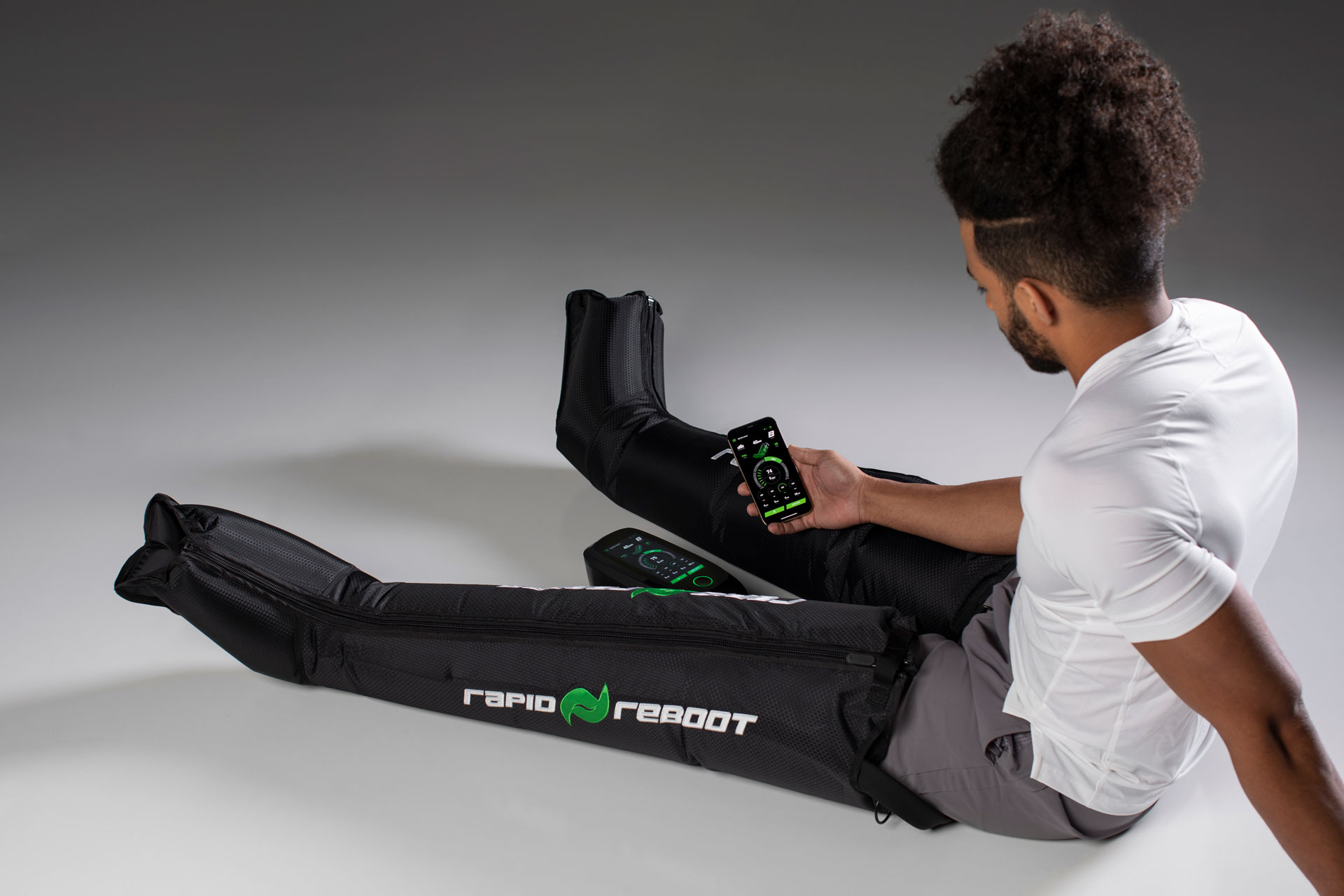
- Sequential compression flushes lactic acid 3x faster
- 20 pressure levels (0–200mmHg) via app control
- Full-leg coverage with gapless overlap zones
- May be FSA/HSA eligible — invest in your recovery
- Portable design for travel to race locations
Race Day Strategy
You've done the training. Now execute the plan. Ironman is a pacing and nutrition game — discipline wins over speed.
Start Conservatively
Seed yourself honestly. Start at the edge or back of your wave to avoid the washing machine. Settle into rhythm by 400m. Sight every 6–8 strokes. Draft off faster swimmers when possible — it saves 15–20% energy. Exit the water calm and controlled.
Target: Easy to moderate effortRide Your Plan, Not Someone Else's
Stay in your power zone (65–75% FTP). Resist surges in the first 30 miles when legs feel fresh. Eat and drink on schedule — set a timer for every 15 minutes. Stay aero. The bike leg is about setting up a strong marathon, not a fast bike split.
Target: Steady Zone 2–3 effortNegative Split the Marathon
Start 10–15 seconds per mile slower than goal pace. Walk every aid station for the first half to eat and drink. Once past mile 13, you can start picking up effort if you feel good. The back half of an Ironman marathon is where races are won.
Target: Conservative start, strong finishYou Are an Ironman
Soak it in. Slow down on the finish chute. Smile for the cameras. Hear your name called. Everything you've trained for comes down to this moment. Celebrate the accomplishment — then start your recovery immediately with proper nutrition, hydration, and compression therapy.
Begin recovery within 30 minutes post-finishSample Weekly Schedule
A typical peak-phase training week for an age-group Ironman athlete. Total volume: 12–16 hours.
3,500 yds
60 min
90 min
(trainer OK)
8–10 mi
70 min
4,000 yds
70 min
spin + Rapid
Reboot session
4–5 hrs + 30
min run off bike
16–18 mi
2.5–3 hrs
The 20-Week Periodization
Structure your training into four distinct phases for peak performance on race day.
Base Phase
Weeks 1–6Build aerobic foundation. Low intensity, moderate volume. Establish swim technique and bike endurance. All runs easy effort.
Build Phase
Weeks 7–12Increase volume and introduce intensity. Add threshold work on the bike, tempo runs, and open-water swims. Start brick sessions.
Peak Phase
Weeks 13–17Highest volume weeks. Long rides (100+ mi), long runs (18–20 mi), and race-simulation sessions. Practice all race-day nutrition.
Taper
Weeks 18–20Reduce volume by 40–60% while maintaining intensity. Focus on recovery, sleep, and mental preparation. Trust the training.
Recover Like a Pro
Ironman training pushes your body to the limit. Give it the recovery it deserves. Rapid Reboot compression therapy helps you bounce back faster so you can train harder, more consistently, and arrive at race day at your absolute best.